
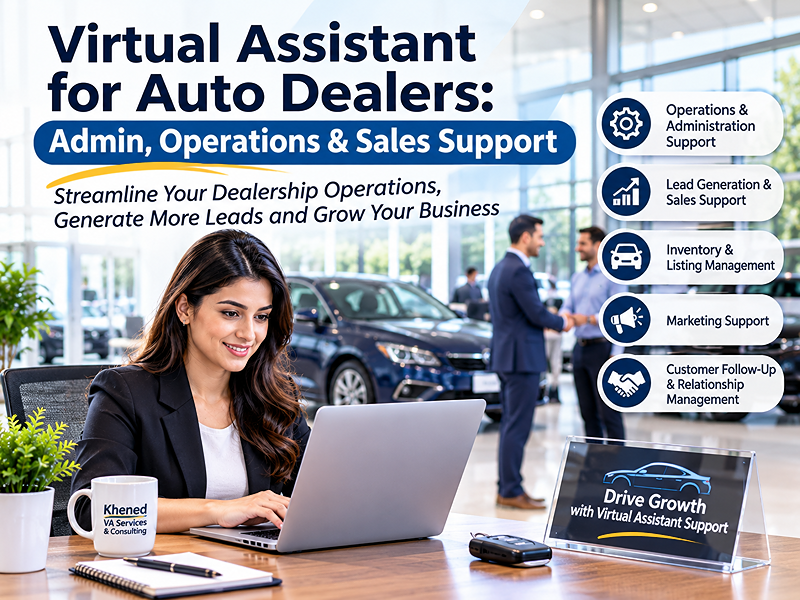
Running an automotive dealership involves much more than selling vehicles. A virtual assistant for auto dealers can help manage the many administrative, operational, sales, and marketing activities that happen behind the scenes every day.
From lead management and customer follow-ups to appointment scheduling, inventory updates, bookkeeping, and marketing support, dealerships handle countless recurring tasks that consume valuable time. While these tasks are important, they often prevent managers and sales teams from focusing on customers, vehicle sales, partnerships, and business growth.
The goal of a virtual assistant is not to replace dealership staff. The goal is to support the dealership’s operations, improve efficiency, and help the sales team spend more time selling.
Why Auto Dealers Need Virtual Assistant Support
As an automotive dealership grows, so does the workload involved in managing vehicles, customers, sales activities, and daily business operations.
Modern dealerships receive enquiries through multiple channels, including websites, third-party vehicle marketplaces, social media, referrals, and showroom visits. Each enquiry requires attention, follow-ups, appointment coordination, and accurate record management.
A Virtual Assistant (VA) can support different areas of the dealership, helping manage this growing workload while allowing the internal team to focus on selling vehicles and delivering a better customer experience.
1. Operations & Administrative Support
Dealership operations involve numerous activities that need to be completed accurately and on time. Although salespeople need to focus on customers, administrative responsibilities can take up a considerable portion of their working day.
A virtual assistant can help keep these processes organized and ensure that routine tasks do not get overlooked.
Inventory & Vehicle Listing Support
Fresh, accurate listings bring buyers in. Outdated ones cost you leads.
How a VA can help:
The dealership team remains responsible for verifying vehicle condition, pricing, legal documentation, and final inventory accuracy.
Customer Enquiry and Appointment Management
Responding promptly to customer enquiries is essential for creating a positive buying experience. Potential buyers may contact a dealership through its website, email, online listings, or social media.
How a VA can help:
The dealership team should handle complex questions about pricing, financing, warranties, and vehicle specifications. The VA keeps enquiries organized and appointments on track.
Documentation and Reporting
Dealerships generate large volumes of paperwork and reports. Organized records and accurate reports help keep dealership operations running smoothly.
How a VA can help:
The dealership team should verify report accuracy and ensure all documents meet regulatory requirements. The VA helps keep records organized and reports ready for review.
Customer Relationship and Service Coordination
Maintaining relationships with existing customers can encourage repeat business and referrals. A VA can support communication throughout the customer journey, from the first enquiry to post-purchase follow-ups.
How a VA can help:
A virtual assistant can help ensure that routine communication is handled consistently while dealership staff manage technical questions and sensitive customer issues.
General Administrative Support
Beyond customer enquiries and inventory, dealerships have recurring administrative responsibilities that require consistent attention.
A VA can also take on ongoing admin such as:
2. Accounting and Financial Support
Financial administration is another important responsibility in automotive businesses. Dealerships need to track expenses, process invoices, monitor payments, and maintain accurate records to understand their financial performance.
A virtual assistant with appropriate bookkeeping experience can help organize financial information and support the dealership’s accounting workflow.
Bookkeeping and Transaction Management
Keeping financial transactions organized makes it easier for dealership owners and accountants to review business performance and prepare financial statements.
How a VA can help:
The dealership’s finance team should review records and approve financial transactions.
Invoice and Payment Coordination
Timely invoice processing and payment follow-ups help businesses maintain organized financial workflows.
How a VA can help:
All financial transactions, payment approvals, and adjustments should follow the dealership’s established authorization procedures.
Financial Reporting and Record Organization
Dealership owners benefit from having clear financial information available when making business decisions.
How a VA can help:
These services help dealership management spend less time gathering information and more time reviewing performance and planning improvements.
Expense & Cash Flow Tracking
Tracking expenses and upcoming payments helps dealerships manage cash flow and plan ahead.
How a VA can help:
The dealership’s management team should review cash-flow reports and make financial decisions. The VA helps keep expense records updated and payment obligations visible.
3. Sales & Business Development Support
Sales and business development are essential to the success of every auto dealership. However, sales teams often spend considerable time researching prospects, updating CRM records, sending follow-up messages, and preparing sales reports.
A virtual assistant can support these activities, helping sales representatives dedicate more time to customer conversations, negotiations, and closing deals.
Lead Generation
A consistent pipeline of potential buyers helps dealerships create more sales opportunities.
How a VA can help:
Sales representatives and managers remain responsible for pricing discussions, negotiations, financing advice, and closing transactions.
Referral & Partnership Development
Strong referral networks help dealerships reach new customers and generate additional sales opportunities.
How a VA can help:
Management approves partnership agreements and commissions. The VA supports research, communication, and coordination.
Marketing, Social Media & Reputation Support
A strong online presence helps dealerships showcase their vehicles, communicate with customers, and attract new enquiries.
How a VA can help:
These activities can help keep marketing efforts organized and consistent while the dealership team focuses on sales strategy and brand positioning.
Benefits of Hiring a Virtual Assistant for Auto Dealers
A virtual assistant is not simply an additional administrative resource. For small and growing automotive dealerships, the right VA can help improve operational efficiency, organize business activities, and support consistent customer communication.
1. More Time to Focus on Vehicle Sales
Dealership owners and sales managers spend considerable time handling administrative tasks, customer follow-ups, inventory updates, and documentation.
A VA can take over many of these recurring responsibilities, allowing the sales team to focus more on customers, showroom visits, negotiations, and closing sales.
2. Reduce Administrative & Staffing Costs
Hiring a virtual assistant can help dealerships avoid some of the costs associated with employing additional full-time administrative staff.
Depending on the arrangement, dealerships can access the support they need without maintaining a traditional full-time position for every administrative responsibility.
3. Improved Operational Efficiency
From inventory updates to service appointment scheduling, many dealership activities involve repetitive administrative work.
Having reliable VA support helps keep these activities organized and reduces the chances of routine tasks being delayed or forgotten.
4. Consistent Sales & Marketing Support
Maintaining a consistent sales follow-up process and marketing schedule can be difficult for small dealership teams.
A VA can support lead generation, CRM updates, social media scheduling, promotional campaigns, and customer communication, helping dealerships maintain regular business development activities.
5. Organized Inventory & Customer Records
Accurate vehicle inventory information and well-maintained customer databases are essential for efficient dealership operations.
A VA can help maintain vehicle listings, update customer information, organize documents, and prepare reports that make important business information easier to access.
6. Flexible Support as Your Dealership Grows
The administrative workload of a dealership can change depending on vehicle inventory, sales activity, seasonal demand, and business expansion.
Virtual assistant support can be adjusted as business requirements change, making it easier to manage increasing workloads without immediately expanding the internal team.
Conclusion
A virtual assistant for auto dealers can support far more than administrative work. From dealership operations and bookkeeping to lead generation, CRM management, customer follow-ups, and marketing support, a VA can contribute across multiple areas of the business.
The right approach is to identify recurring tasks that consume time and determine which can be delegated, automated, or supported remotely. This allows dealership managers and sales teams to focus on customers, vehicle sales, business growth, and strategic decisions.
By combining AI-powered tools with human VA support, dealerships can streamline processes, improve consistency, enhance customer experiences, and create more time for revenue-generating activities.
Looking to simplify dealership operations and grow sales? Contact Khened VA Services today to discover how our virtual assistant services can support your automotive dealership.