
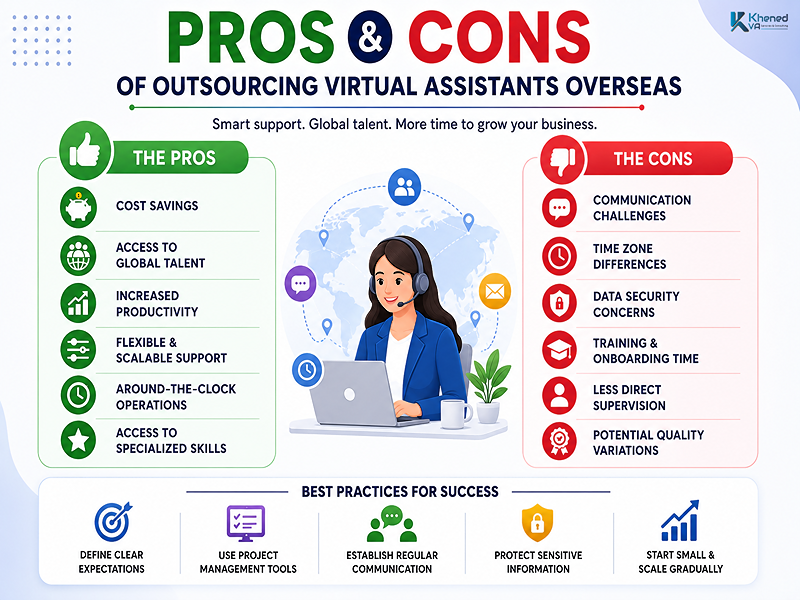
Outsourcing virtual assistants has become a game changer for businesses looking to save time, streamline operations, and focus on growth. Are you spending more time managing emails, scheduling appointments, and administrative tasks than serving customers or expanding your business? If so, an overseas virtual assistant could be the support you need.
As remote work continues to evolve, companies are increasingly turning to virtual assistant services and outsourced business support for affordable access to skilled professionals worldwide. From administrative assistance and customer service to digital marketing and lead generation, virtual assistants can handle a wide range of tasks remotely.
However, like any business decision, hiring overseas virtual assistants comes with both advantages and challenges.
In this guide, we’ll explore the key pros and cons of outsourcing virtual assistants, helping you determine whether it’s the right solution for your business.
Why More Businesses Are Outsourcing Virtual Assistants
According to recent remote work studies, businesses increasingly outsource at least one business function, with virtual assistant services emerging as one of the fastest growing outsourcing categories.
Rising labor costs, digital transformation, and the demand for flexible staffing solutions are encouraging companies to hire remote assistants who can provide specialized support without the overhead costs associated with traditional employees.
As businesses continue to embrace remote work and digital collaboration, virtual assistants are becoming an essential part of modern business operations.
The Pros of Outsourcing Virtual Assistants
1. Significant Cost Savings
One of the biggest reasons businesses choose outsourcing virtual assistants is cost efficiency. Hiring full time in house employees often involves salaries, benefits, office space, equipment, and training expenses.
Overseas virtual assistants typically offer high quality services at a fraction of the cost, allowing businesses to allocate resources more strategically and improve profitability.
2. Access to a Global Talent Pool
When you hire locally, your options are limited by geography. Outsourcing opens access to skilled professionals from around the world.
Whether you need a content writer, customer support specialist, bookkeeping assistant, or social media manager, you can find experienced talent that aligns with your business goals and budget.
3. Increased Productivity
Business owners often spend valuable time on repetitive administrative tasks. By outsourcing virtual assistants, companies can delegate routine responsibilities and focus on strategic growth activities.
This improved division of labor helps leaders concentrate on revenue generating initiatives while ensuring daily operations continue smoothly.
4. Flexible and Scalable Support
Business needs change frequently. Virtual assistants provide flexibility that traditional hiring models often cannot.
You can easily scale support up during busy seasons or reduce hours during slower periods without the long term commitments associated with full time employees.
5. Around the Clock Operations
Working with overseas virtual assistants in different time zones can create extended business coverage.
Tasks can be completed while your local team is offline, helping businesses respond faster to customers, meet deadlines more efficiently, and maintain continuous productivity.
6. Access to Specialized Skills
Many virtual assistants possess expertise in specific areas such as:
This allows businesses to access specialized skills without hiring multiple full time professionals.
The Cons of Outsourcing Virtual Assistants
1. Communication Challenges
Language differences, communication styles, and cultural nuances can occasionally create misunderstandings.
Clear expectations, detailed documentation, and regular meetings help minimize communication gaps and keep projects on track.
2. Time Zone Differences
While time zone differences can provide extended coverage, they may also make real time collaboration more difficult.
Scheduling overlap hours and using collaboration tools such as Slack, Microsoft Teams, or Zoom can help maintain effective communication.
3. Data Security Concerns
Virtual assistants often handle sensitive business information, including customer data, financial records, and internal processes.
Businesses should implement secure systems, confidentiality agreements, password management tools, and access controls to protect critical information.
4. Training and Onboarding Requirements
Even experienced virtual assistants need time to understand your business processes, systems, and expectations.
Investing in proper onboarding, standard operating procedures, and training materials can significantly improve performance and long term success.
5. Less Direct Supervision
Unlike in office employees, overseas virtual assistants work remotely. Some business owners may initially find it challenging to monitor productivity and performance.
Fortunately, project management tools and performance tracking systems make it easier to manage remote teams effectively.
6. Potential Quality Variations
Not all virtual assistants offer the same level of expertise and professionalism.
Careful screening, skills assessments, reference checks, and trial projects can help businesses identify reliable and qualified candidates.
Quick Comparison: Pros vs Cons of Outsourcing Virtual Assistants
| Pros | Cons |
|---|---|
| Lower operating costs | Time zone differences |
| Access to global talent | Communication barriers |
| Flexible staffing | Initial onboarding time |
| Specialized skills | Data security concerns |
| Increased productivity | Quality variations |
How to Successfully Manage Overseas Virtual Assistants
To maximize the benefits of outsourcing virtual assistants, consider these best practices:
1. Define Clear Expectations
Create detailed task descriptions, performance metrics, and communication guidelines from the start.
2. Use Project Management Tools
Platforms such as Trello, Asana, ClickUp, and Monday.com help streamline workflows and improve accountability.
3. Establish Regular Communication
Weekly check ins, progress updates, and feedback sessions help build strong working relationships.
4. Protect Sensitive Information
Use secure password managers, restricted access permissions, and non-disclosure agreements when necessary.
5. Start Small
Begin with a few tasks before gradually increasing responsibilities as trust and confidence develop.
Is Outsourcing Virtual Assistants Right for Your Business?
Outsourcing virtual assistants can be an excellent solution for businesses looking to improve efficiency, reduce costs, and gain access to specialized expertise.
It works particularly well for entrepreneurs, startups, consultants, e-commerce businesses, marketing agencies, and small business owners who need reliable support without the expense of expanding an internal team.
The key to success lies in choosing the right virtual assistant, implementing clear processes, and maintaining open communication.
Who Benefits Most from Outsourcing Virtual Assistants?
Outsourcing virtual assistants can be particularly beneficial for:
Businesses across a wide range of industries can benefit from outsourcing virtual assistants, particularly those looking to reduce administrative workloads, improve efficiency, and scale operations without increasing overhead costs.
Want to see how different industries are using virtual assistants? Check our guide on the top industries using virtual assistants for business growth insights.
Conclusion
As remote work continues to shape modern business operations, outsourcing virtual assistants remains a practical and cost effective solution for businesses seeking greater efficiency and growth.
While challenges such as communication barriers, time zone differences, and data security concerns may arise, they can be effectively managed with clear processes, proper planning, and regular communication. By understanding the pros and cons, businesses can build successful partnerships with overseas virtual assistants and focus on what matters most: growth.
Ready to Work Smarter?
Stop spending valuable time on repetitive tasks that keep you from serving customers and growing your business. With the right virtual assistant, you can improve efficiency, streamline operations, and focus on achieving your business goals.
Contact Khened VA Services & Consulting today to learn how our virtual assistant services can help you save time, improve efficiency, and focus on growing your business
Frequently Asked Questions
The primary benefits include cost savings, increased productivity, access to global talent, flexibility, scalability, and specialized expertise.
Yes. Many overseas virtual assistants are highly skilled professionals with experience supporting businesses across various industries. Proper screening and onboarding are essential.
Costs vary depending on experience, skills, and location. However, hiring overseas virtual assistants is often significantly more affordable than hiring full time in house staff.
Virtual assistants can manage administrative support, customer service, social media management, bookkeeping, email management, lead generation, content creation, research, and more.
Businesses can improve communication through regular meetings, clear documentation, project management tools, and defined expectations.
Absolutely. Small businesses often benefit the most from outsourcing virtual assistants because it provides professional support without the overhead costs associated with traditional hiring.
Start by identifying the tasks you want to delegate, evaluating the skills required, reviewing experience and references, and conducting interviews or trial projects before making a long term commitment.