Hiring a Virtual Assistant can be one of the smartest decisions a business owner makes to save time, improve productivity, and support business growth. Many entrepreneurs spend valuable time managing emails, scheduling appointments, and handling routine administrative tasks instead of focusing on activities that drive growth.
A skilled virtual assistant can help streamline daily operations, manage essential business tasks, and provide reliable business support services. Whether you need a remote virtual assistant for administrative support, customer service, lead generation, bookkeeping, or marketing, hiring a virtual assistant can help improve productivity and support business growth.
This guide covers everything you need to know about hiring a virtual assistant, including tasks to delegate, hiring processes, costs, and best practices for long-term success.
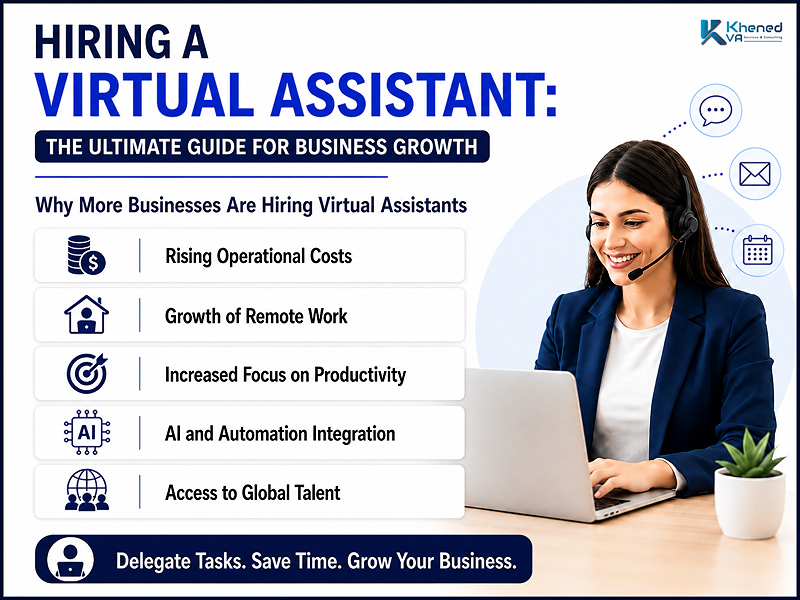
Why More Businesses Are Hiring Virtual Assistants
The business landscape has evolved dramatically over the past few years. Companies are increasingly embracing flexible work models and cost-effective staffing solutions.
Many companies are turning to virtual assistant services and outsourcing for small businesses to reduce costs, improve efficiency, and access specialized skills.
As businesses grow, many owners begin to recognize the signs that they need additional support. If you’re unsure whether now is the right time, explore these common signs that you need a virtual assistant for your business.
Several factors are driving the demand for virtual assistants:
1. Rising Operational Costs
Businesses are seeking ways to reduce overhead expenses associated with office space, equipment, benefits, and recruitment.
2. Growth of Remote Work
Remote collaboration tools have made it easier than ever to work with talented professionals globally.
3. Increased Focus on Productivity
Business owners are realizing that spending time on repetitive tasks limits growth opportunities.
4. AI and Automation Integration
Virtual assistants now work alongside AI tools to improve efficiency, automate workflows, and deliver faster results.
5. Access to Global Talent
Organizations can hire skilled professionals based on expertise rather than geographic location.
Tasks You Can Delegate to a Virtual Assistant
Many businesses hire a virtual assistant to manage administrative support services, lead generation, customer support, bookkeeping, and marketing activities.
1. Administrative Support
2. Sales Support
3. Marketing Support
4. Customer Service
5. Bookkeeping and Finance
How to Hire a Virtual Assistant
If you’re ready to hire a virtual assistant, understanding our process can help you get started quickly and find the right support for your business.
Step 1: Identify the Tasks You Need Help With
List the tasks that take up most of your time, such as email management, scheduling, customer support, or data entry.
Step 2: Define Your Requirements
Decide what skills, experience, working hours, and budget are needed for the role.
Step 3: Create a Clear Job Description
Outline the responsibilities, required skills, and expectations so candidates understand the role.
Step 4: Review and Interview Candidates
Check their experience, communication skills, and ability to handle the tasks you need support with.
Step 5: Start with a Trial Project
Assign a small paid task to evaluate their performance, reliability, and work quality.
Step 6: Provide Training and Guidelines
Share instructions, processes, and tools to help your virtual assistant understand your business and responsibilities.
Step 7: Maintain Regular Communication
Schedule regular check-ins, provide feedback, and build a strong working relationship for long-term success.
How AI Is Transforming Virtual Assistant Services
One of the biggest trends is the combination of human expertise and artificial intelligence.
However, while AI improves efficiency, human judgment, communication, creativity, and relationship-building remain irreplaceable.
Businesses that combine AI-powered tools with skilled virtual assistants gain a significant competitive advantage.
Freelance Virtual Assistant vs Virtual Assistant Agency
When hiring a virtual assistant, businesses often choose between working with an independent freelancer or partnering with a virtual assistant agency.
Freelance Virtual Assistant
A freelance virtual assistant may offer flexibility and competitive pricing. This option can work well for businesses with straightforward support needs and established processes.
Virtual Assistant Agency
A virtual assistant agency provides access to trained professionals, backup support, quality control, and structured processes. This can be beneficial for businesses looking for reliability, scalability, and ongoing support.
The right choice depends on your business goals, budget, and the level of support you require.
| Freelance Virtual Assistant | Virtual Assistant Agency |
|---|---|
| Lower cost | Structured support |
| Direct communication | Backup support available |
| Flexible arrangements | Easier scalability |
| Suitable for smaller needs | Suitable for growing businesses |
Best Practices for Managing a Virtual Assistant
1. Set Clear Expectations
Define responsibilities, deadlines, and key performance indicators.
2. Use Collaboration Tools
Popular tools include:
3. Schedule Regular Check-Ins
Weekly meetings help maintain alignment and accountability.
4. Provide Constructive Feedback
Continuous feedback improves performance and strengthens collaboration.
5. Build a Long-Term Partnership
Treat your virtual assistant as an extension of your team rather than a temporary resource.
How Much Does It Cost to Hire a Virtual Assistant?
Virtual assistant pricing varies depending on:
Businesses can choose from:
While costs vary, hiring a virtual assistant is generally more affordable than hiring a full-time in-house employee.
Why Small Businesses Are Choosing Virtual Assistants
Small businesses often operate with limited resources and lean teams. A virtual assistant for small business owners provides professional support without the financial commitment of hiring additional in-house staff. This flexibility allows businesses to stay productive, manage costs effectively, and focus on core business activities.
From administrative support services and customer service to lead generation, sales prospecting, and marketing execution, virtual assistant services help small businesses streamline operations and improve efficiency. By outsourcing routine tasks to a remote virtual assistant, business owners can dedicate more time to growth, customer relationships, and strategic planning.
Whether you need help with day-to-day administration, customer support, or business support services, a virtual assistant can provide the flexibility and expertise needed to compete more effectively in today’s digital marketplace.
Conclusion
Hiring a virtual assistant is a practical way to improve efficiency, reduce workload, and support long-term business success. Whether you’re a startup, entrepreneur, or small business owner, the right virtual assistant can help you stay focused on strategic priorities while ensuring day-to-day operations run smoothly.
Whether you need help with administrative support, customer service, lead generation, bookkeeping, marketing, or other business support services, the right virtual assistant can become a valuable extension of your team. By delegating routine tasks, you can focus more on growing your business and achieving your goals.
Ready to Grow Your Business?
Stop spending valuable time on day to day tasks and focus on what matters most. Partner with Khened VA Services & Consulting and let our experienced virtual assistants help improve productivity, streamline operations, and support your business growth.
Frequently Asked Questions (FAQs)
The primary benefit is saving time by delegating repetitive and administrative tasks, allowing business owners to focus on strategic growth activities.
This depends on your workload. Businesses can hire virtual assistants part-time, full-time, or for specific projects.
Yes. Many virtual assistants provide social media management, content creation, email marketing, SEO support, and lead generation services.
Yes. Virtual assistants help reduce overhead expenses while providing flexible professional support.
Virtual assistants support industries including real estate, healthcare, consulting, eCommerce, legal services, finance, technology, and professional services.
Absolutely. Many modern virtual assistants leverage AI-powered platforms to improve productivity, automate tasks, and deliver faster results.
Most businesses can onboard a virtual assistant within a few days to a few weeks, depending on task complexity and training requirements.
Both options have advantages. Freelancers may offer flexibility and lower costs, while agencies often provide trained professionals, backup support, and established processes.
Yes. A virtual assistant can help small business owners save time, improve productivity, reduce operational costs, and focus on activities that drive growth. Many businesses find that delegating routine tasks allows them to scale more efficiently.