
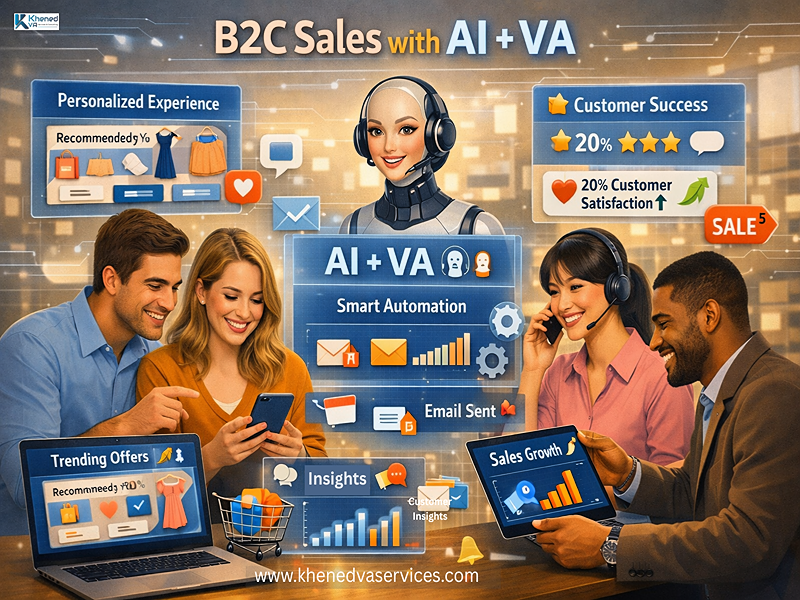
Selling directly to consumers today requires more than just putting products online. Modern customers expect personalized experiences, quick responses, and seamless interactions at every touchpoint. Success requires strategy, human insight, and the smart use of technology to not only attract customers but also retain them for the long term.
This guide will take you step-by-step through practical B2C sales strategies, real-world examples, and workflows you can implement immediately. Toward the end, we’ll explore how AI automation and Virtual Assistants can elevate your sales process, ensuring every customer interaction feels personal, timely, and impactful.
Understanding the Modern Consumer Mindset
Consumers today are more informed, connected, and impatient than ever. They have a world of options at their fingertips, and the moment your business fails to capture attention or provide value, they move on.
Key insights into consumer behavior include:
A strong B2C sales strategy focuses on meeting these expectations consistently across every touchpoint, from social media engagement to the checkout process.
Strategy 1: Data-Driven Customer Insights
The businesses that succeed are those that know their customers inside out.
Implementation Steps:
Example:
A home decor store noticed customers browsing rugs also looked at curtains. Sending personalized recommendations led to a 25% increase in average order value.
Strategy 2: Optimize the Customer Journey
Every interaction matters. From browsing products to completing a purchase, the experience should be frictionless.
Key Actions:
Example:
An electronics retailer reduced cart abandonment by 18% after simplifying checkout from six steps to three and implementing auto-fill forms.
Strategy 3: Multi-Channel Engagement
Consumers interact with brands in multiple ways. Effective sales strategies meet them wherever they are.
Implementation:
Mini Case Study:
A fashion retailer saw abandoned cart conversions jump from 5% to 20% after implementing SMS reminders.
Strategy 4: Personalization at Scale
Generic messages no longer work. Personalization drives loyalty and repeat sales.
Actions:
Example:
A skincare brand segmented users by skin type and sent personalized product recommendations. Repeat purchases increased by 30% in six weeks.
Strategy 5: Build Trust Through Transparency
Trust is a critical factor in consumer decision-making.
Steps:
Example:
A wellness brand added customer before-and-after photos to product pages, boosting conversion rates by 15% in one month.
Strategy 6: Loyalty and Retention Programs
Retention is cheaper than acquisition. Loyalty programs encourage repeat purchases and increase lifetime value.
Implementation:
Case Study:
A subscription box company created a points-based loyalty system, increasing repeat purchases by 35% within six months.
Strategy 7: Continuous Testing and Optimization
Sales strategies should never remain static. Continuous testing ensures businesses stay relevant and effective.
Steps:
Example:
An online food delivery service tested two checkout flows. One streamlined process increased conversions by 12% and reduced cart abandonment.
Strategy 8: Upselling and Cross-Selling
Revenue from existing customers is often easier than acquiring new ones.
Tips:
Example:
A tech accessory store recommended laptop sleeves and mice to buyers, boosting average order value by 22%.
Strategy 9: Customer Feedback and Continuous Improvement
Listening to customers ensures long-term relevance and loyalty.
Steps:
Example:
A skincare brand redesigned packaging based on feedback, leading to improved reviews and a 10% increase in repeat purchases.
The Modern Era of B2C Sales: AI and Virtual Assistants
While these strategies provide a roadmap for success, the modern market has added another layer: AI automation and Virtual Assistants.
AI tools allow businesses to analyze behavior, automate campaigns, and predict customer needs. Predictive analytics and personalized recommendations make sales processes efficient and effective.
However, AI alone cannot replicate empathy, intuition, and personal connection. Customers still value conversations that feel human, responsive, and attentive.
This is where Virtual Assistants make the difference. A VA can:
Mini Case Study:
A home decor store implemented AI recommendations and a VA to oversee campaigns. Within three months, repeat purchases increased by 30%, and customer satisfaction rose by 20%.
Balancing AI Automation and Human Insight
Successful B2C sales strategies combine automation with emotional intelligence. Virtual Assistants allow businesses to scale operations without sacrificing quality, ensuring every touchpoint is meaningful and personal.
Also Read:
- Learn how technology and human expertise integrate in other sales models: The Evolution and Future of B2B Sales in the Age of AI and Automation
- Master lead conversion for sustainable growth: How to Convert Leads to Sales for Small Business Growth
Conclusion
Mastering B2C sales today is about strategy, human insight, and smart technology working together. By implementing practical strategies, optimizing workflows, listening to customers, and leveraging Virtual Assistants alongside AI automation, businesses can:
Take Action Today:
Transform your B2C sales with the help of a skilled Virtual Assistant. At Khened VA Services, we help businesses streamline sales, manage AI-powered campaigns, and deliver personalized customer experiences that drive results. Let us help you convert more leads, grow revenue, and scale your business confidently.