
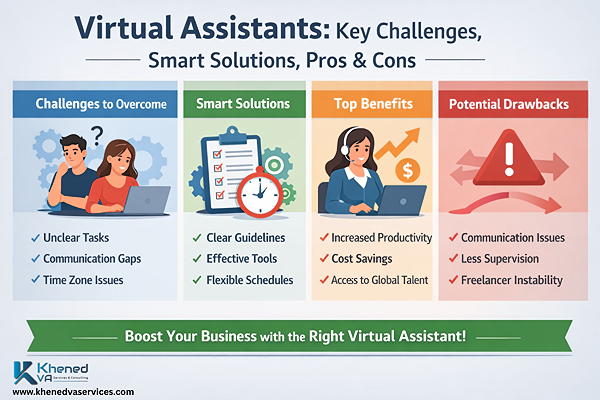
In today’s fast-paced digital world, virtual assistants (VAs) are no longer just a trend—they have become a strategic advantage for businesses of all sizes. From startups and solopreneurs to growing enterprises, virtual assistants help increase productivity, streamline operations, and improve overall efficiency.
This comprehensive guide explores the key challenges of working with virtual assistants, smart solutions to overcome them, and the pros and cons of hiring VAs
What Is a Virtual Assistant?
A virtual assistant is a remote professional who supports businesses by handling time-consuming tasks such as administrative work, customer support, data management, social media management, scheduling, and technical assistance. By working remotely and leveraging modern digital tools, virtual assistants help businesses operate more efficiently without the cost of in-house staffing.
Key Challenges of Working with Virtual Assistants (And How to Solve Them)
While virtual assistants can transform business operations, businesses often face a few common challenges. The good news is that each challenge has a practical solution.
1. Unclear Role & Task Assignments
Problem:
Hiring a virtual assistant without clearly defining their role often leads to confusion, inefficiencies, and delayed outcomes.
Solution:
This clarity ensures your virtual assistant understands priorities and delivers consistent results.
2. Communication Barriers
Problem:
Remote work can create communication gaps due to time delays, language differences, or unclear instructions.
Solution:
Strong communication systems keep everyone aligned and productive.
3. Time Zone Differences
Problem:
Virtual assistants may work from different time zones, making coordination challenging.
Solution:
Proper scheduling eliminates delays and improves collaboration.
4. Technology & Connectivity Issues
Problem:
Remote work depends heavily on technology, and unreliable internet or outdated tools can disrupt workflows.
Solution:
These steps help maintain uninterrupted operations.
5. Costs and Budget Considerations
Problem:
Initial onboarding and training may feel like a financial investment.
Solution:
This approach maximizes ROI while controlling costs.
Pros of Hiring Virtual Assistants
When managed effectively, virtual assistants offer significant advantages to businesses.
1. Saves Time & Boosts Productivity
Virtual assistants handle repetitive and time-consuming tasks, allowing business owners and teams to focus on strategy, growth, and decision-making.
2. Cost-Effective Support
Hiring a virtual assistant is often more affordable than employing full-time staff. Businesses save on salaries, benefits, office space, and infrastructure.
3. Flexible & Scalable Operations
Virtual assistant services can be scaled up or down based on workload, business growth, or seasonal demands.
4. Access to Global Talent
Businesses gain access to a global pool of skilled professionals with expertise in administration, customer service, marketing, and technical support.
5. Improved Work-Life Balance
Delegating tasks to virtual assistants reduces burnout and helps business owners maintain a healthier work-life balance.
Cons of Hiring or Being a Virtual Assistant
Despite their benefits, virtual assistants also come with certain limitations.
1. Communication Misunderstandings
Without clear documentation and regular updates, remote communication can sometimes lead to misinterpretation.
2. Less Direct Supervision
Managing productivity remotely requires trust, structured processes, and performance tracking tools.
3. Potential Isolation for Virtual Assistants
Working remotely without team interaction may affect motivation and engagement if not managed well.
4. Income Instability for Freelance VAs
Freelancers may experience inconsistent workloads without long-term contracts.
5. Limited Understanding of Company Culture
Virtual assistants may take time to fully align with brand values and internal culture during onboarding.
Best Practices for Working with Virtual Assistants
To maximize success, businesses should follow these best practices:
These practices ensure long-term efficiency and strong working relationships.
Conclusion: Are Virtual Assistants Worth It?
Yes—when managed strategically. Virtual assistants help businesses save time, reduce operational costs, and scale efficiently. With the right systems, communication, and expectations in place, virtual assistants are not just cost-saving resources—they are powerful growth enablers for modern businesses.
Ready to hire a reliable virtual assistant for your business?
Khened VA Services and Consulting offers scalable, professional virtual assistant solutions tailored to your needs—connect with us at khenedvaservices.com/contact-us to get started.