Introduction: Why Do Most New Year’s Resolutions Fail?
As we step into 2026, many of us are filled with optimism, hoping to achieve the goals we’ve set. Whether it’s losing weight, quitting a bad habit, or improving productivity, New Year’s resolutions are a tradition. However, studies show that most people abandon their New Year’s resolutions by February.
Why do so many resolutions fail? The truth lies in the myths and misconceptions we often believe about resolutions. Let’s explore and bust these myths to help you make 2026 the year you actually succeed in reaching your goals.
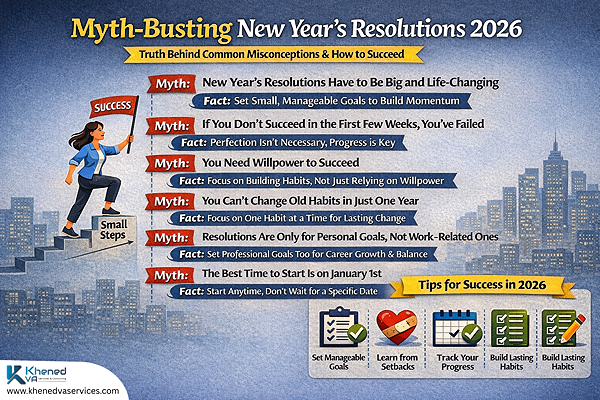
1. Myth: New Year's Resolutions Have to be Big and Life-Changing
The idea that a resolution must be a massive overhaul of your life is one of the most misleading myths. While it’s true that aiming high can be inspiring, setting an unrealistic or overly ambitious goal can quickly lead to burnout and discouragement.
Reality & Tip: Set small, manageable goals that contribute to your long-term vision. For example, if you aim to lose weight, instead of focusing on a drastic weight loss, start by committing to exercise for 20 minutes a day or swapping sugary snacks for healthier options. These smaller goals build momentum and make it easier to achieve long-term success.
2. Myth: If You Don’t Succeed in the First Few Weeks, You’ve Failed
A common misconception is that resolutions must be followed through without deviation. If you falter in the first few weeks, it’s often seen as a failure, and many people abandon their resolutions altogether.
Reality & Tip: Success isn’t about perfection; it’s about progress. If you miss a day or fall off track, it’s okay! What truly matters is your ability to bounce back and keep moving forward. Forgive yourself for mistakes, and focus on your long-term vision. Embrace the learning process, knowing that each step forward brings you closer to your goals, even if it’s not perfect.
3. Myth: You Need Willpower to Succeed
Many people believe that achieving their New Year’s goals is all about sheer willpower. However, willpower alone isn’t enough. Relying solely on willpower often leads to failure because it’s easy to lose motivation over time.
Reality & Tip: Instead of relying solely on willpower, focus on habit formation. Build consistent, small actions into your daily routine that align with your goals. For example, if you want to read more, place books in visible spots around your home or set daily reminders. These small habits will eventually compound into big results.
4. Myth: You Can’t Change Old Habits in Just One Year
We’ve all heard that it takes 21 days to form a habit, but this oversimplification doesn’t reflect the complexities of behavioral change. While some habits may be easier to change than others, long-term transformation requires time, patience, and perseverance.
Reality & Tip: Focus on one habit at a time. Don’t rush the process. It’s better to make slow, sustainable changes than to try to change everything at once and burn out.
5. Myth: Resolutions Are Only for Personal Goals, Not Work-Related Ones
Many people reserve New Year’s resolutions for personal goals only, but professional growth is just as important. Whether it’s improving your work-life balance, gaining a new skill, or enhancing your productivity, setting work-related resolutions can set you up for success.
Reality & Tip: If you want to improve your career in 2026, set SMART (Specific, Measurable, Achievable, Relevant, Time-bound) goals. For instance, you could aim to attend one professional development seminar each quarter or improve your communication skills by writing a weekly blog post. This approach will help you stay focused and motivated in both your personal and professional life.
6. Myth: The Best Time to Start Is on January 1st
While the new year offers a fresh start, waiting for January 1st to set your goals can delay your progress. The truth is, any day is a good day to start. The sooner you begin, the sooner you’ll see results.
Reality & Tip: Don’t wait for a particular date. Take action today, whether it’s January 1st or not. Start with small steps, and you’ll be surprised at how quickly momentum builds.
Conclusion: It’s Time for a Fresh Approach to Resolutions
Rather than seeing New Year’s resolutions as a set of rigid, must-achieve goals, consider them as opportunities for growth, ongoing improvement, and reflection. The key to success lies in setting realistic, sustainable goals and being kind to yourself when you encounter setbacks. In 2026, let’s embrace resolutions that align with our true values and are achievable year-round—not just on January 1st.
Start Today: