
Not every employee arrives at work each day full of energy and enthusiasm. But if you notice ongoing low motivation, declining productivity, or disengagement across your team, it could be a sign that engagement levels need attention.
Employee engagement is more than just job satisfaction—it’s about how deeply employees feel connected to their work, their colleagues, and the company’s mission. When engagement is high, employees not only perform better but also take ownership of the organization’s success.
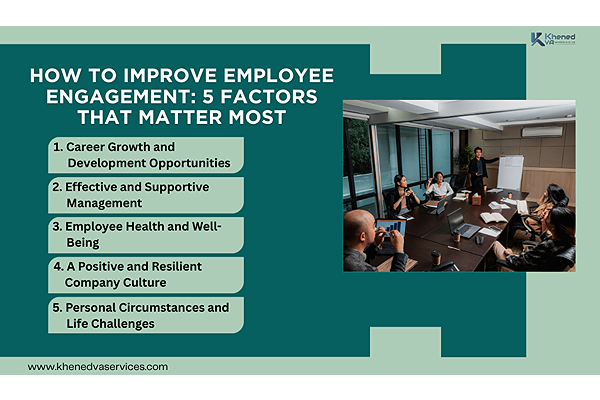
Here are five critical factors that shape employee engagement in the workplace.
1. Career Growth and Development Opportunities
Top performers are drawn to companies that provide a clear path forward. They want to know that their hard work today will lead to meaningful opportunities tomorrow. Without growth, even the most talented employees may look elsewhere.
To foster long-term commitment:
When employees see a future with your organization, they’re more likely to stay engaged and motivated.
2. Effective and Supportive Management
Managers play a pivotal role in employee engagement. In fact, employees often experience the company through their direct supervisors. A skilled manager can inspire growth, while poor leadership can quickly erode trust and motivation.
Great managers:
Strong management creates an environment where employees feel guided, supported, and valued.
3. Employee Health and Well-Being
Wellness directly affects productivity. When employees face health challenges or chronic fatigue, their performance and engagement drop.
To promote well-being:
A healthy workforce is not only more engaged but also more resilient in the face of challenges.
4. A Positive and Resilient Company Culture
Culture is one of the top considerations for job seekers. A strong, well-defined culture helps employees connect with the company’s mission and feel a sense of belonging.
To strengthen culture:
A thriving culture acts as glue, keeping employees engaged even during times of change.
5. Personal Circumstances and Life Challenges
Even the most dedicated employees face personal struggles—such as family loss, relationship changes, financial stress, or mental health challenges. These personal factors can significantly affect focus, motivation, and overall engagement.
While many employees hesitate to share such issues at work, employers can still provide meaningful support:
Acknowledging the human side of work reminds employees that they are valued as individuals, not just as contributors.
Final Thoughts
Employee engagement doesn’t happen by accident—it’s built through intentional effort. By focusing on career growth, supportive management, employee health, strong culture, and compassion for personal challenges, leaders can create a workplace where employees feel motivated, connected, and inspired to perform at their best.
Engaged employees aren’t just more productive—they’re also more loyal, innovative, and aligned with the company’s mission. Investing in engagement is investing in long-term organizational success.